
There have been toy and model cars for about as long as real cars. The first models were clearly meant as toys but nevertheless were often faithful, at least generically, to vehicles of their period. Some, on the other hand, were recognisably models of specific cars.
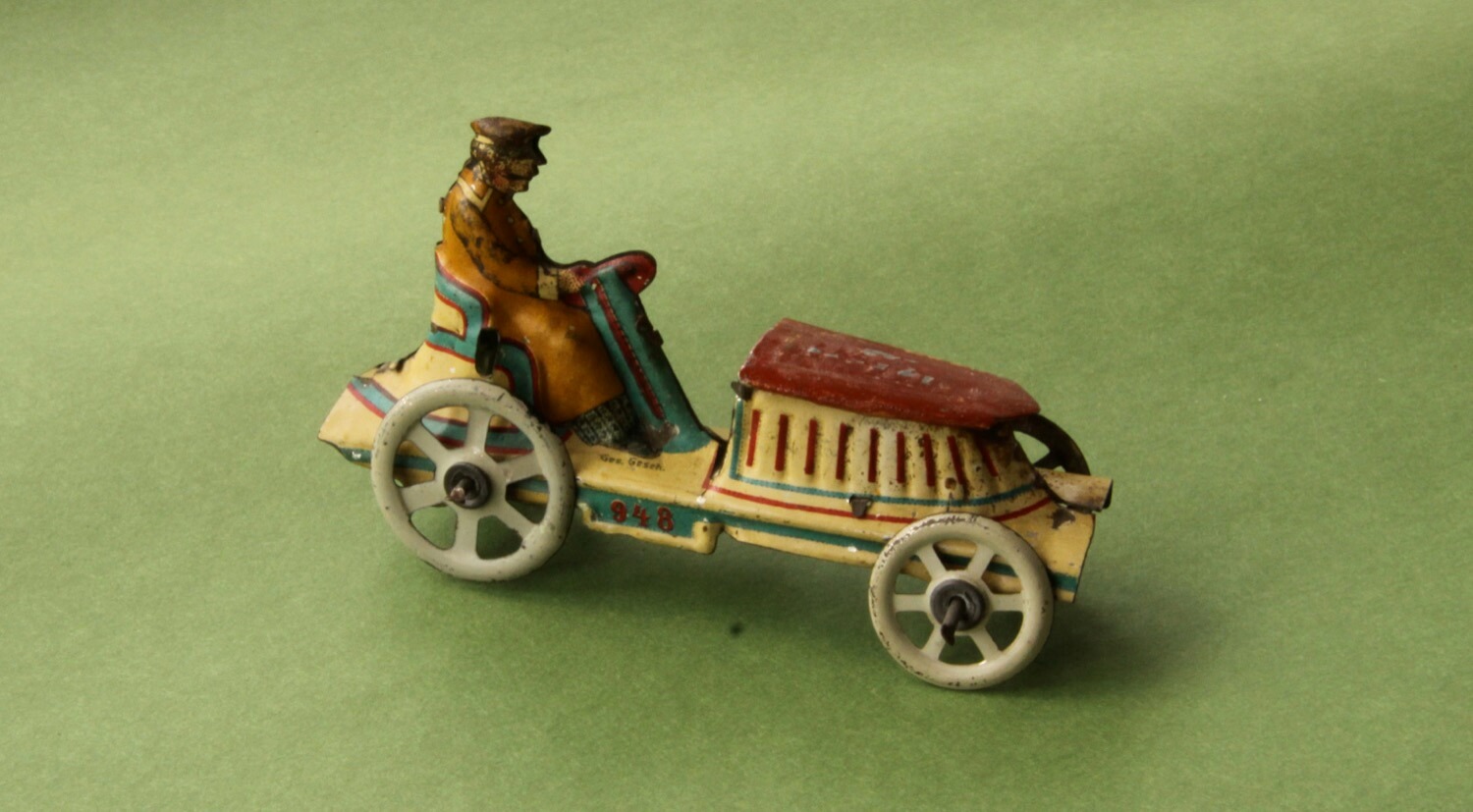
The oldest models in my collection are known to collectors as Penny Toys and were cheap “tin toys” made in Germany in the very early years of the 20th century. Made of lithographed stamped steel. They were colourful, and being cheap, not many have survived. So if you find one from a specialist dealer it will certainly no longer be cheap...
Tin toys were widely made around the world into the 1960’s. While they could be charming , quality and realism were generally less important than producing at a cheap price.
In the 1920s and 30s, toys made of lead became very common, particularly in the USA, where the technique of slush molding became widespread and allowed for cheap toys to be produced both by established manufacturers as well as small businesses operated by individuals operating from their homes.
In the 1920s and 30s particularly in the USA, cast iron toys were also produced. Typically cast in two halves and held together by a clip or bolts, these were virtually indestructible compared to other toys of the period
In my own collection I have toys and Models made from a wide variety of materials Including; tin, lead, cast iron, aluminium, magnesium, wood, glass, celluloid, “plaster and flour” glass, Bakelite as well as the more modern plastics such as polystyrene and finally the most common of all, the zinc alloy usually referred to as Zamak.
From 1930s through to the 1950s accurate well made diecast lead and Zamak Models were produced in increasing numbers by manufacturers mainly in Europe and the USA. Brand names such as Tootsietoys in America, Dinky Toys, Crescent Corgi and Britains in England. Also Dinky Toys along with Solido, AR CIJ and others France, Marklin in Germany along with a host of others churned out attractive, reasonably priced models in the millions.
In the 1960s specialist producers began making models and kits in white metal which could be centrifugally cast in rubber molds without the expense of steel tooling required for Diecasting Zamak. John Day in England, was not the first producer of white metal kits but he was the first large scale one and was soon joined by many competitors in France, Italy and Germany as the cottage industry technique was easy to adopt. Most brands produced small quantities - in the hundreds or even merely dozens.
These were very soon followed by resin cast kits and models which, collectors are familiar with today. These have allowed enthusiasts to add models to their collections that the larger manufacturers would not bother to produce because of limited demand.
A few models and kits from the author’s collection. Acorn Models in the top row were produced in Wales by Peter Atkinson and were the only kits in 1/43 scale made in “Vac Form” clear plastic like slot car racing bodies.
As production techniques have improved so has the quality and accuracy of the models. In the 1960s the toy manufacturers competed with each other for market share and we saw Corgi in England bringing out models with windows which Dinky did not do at the time. In rapid succession the models started getting opening doors, boots and bonnets, reclining seats, working suspension and steering, along with a host of other “improvements”
From the point of view of simple accuracy, the kit manufacturers and “handbuilt producers of expensive finished models, concentrating on finer and finer detailing and finishing, introduced processes like photo etched steel which permitted levels of delicate detail which are not viable for producers aiming products primarily at the Toy market.
At various times, as the hobby of collecting both models and old toys spread in popularity, various collectors started writing articles in specialist magazines and then books, listing either individual manufacturers’ output or types of model vehicle. I think it fair to say that listing everything ever made is verging on the impossible. In my collection, I have toys and models made by a huge number of producers from all over the world and even after more than sixty years of collecting and visiting dealers,swap meets and fellow enthusiasts I keep discovering pieces that I have never seen or even heard of before.
This article and small collection of photos is designed as an introduction to the history And variety of toys and models which I have been collecting for so long.